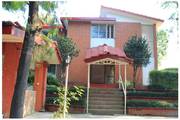

About Samarpan Academy Institute of Crisis Management Studies
The Institute of Crisis Management Studies (ICMS) at Samarpan Academy, located in Dhumbarahi - 4, Kathmandu, is a premier academic institution affiliated with Tribhuvan University’s Faculty of Humanities and Social Sciences. Specializing in the management of natural and man-made crises, ICMS offers a unique multidisciplinary approach to education, with programs including a Master’s in Crisis Management Studies (MCMS), a Master’s in Counseling Psychology (MCP), and a Bachelor of Computer Application (BCA). The academy combines theoretical knowledge with practical training, including simulation exercises, field visits, and hands-on experiences with governmental and non-governmental organizations, preparing students to handle real-life crisis scenarios effectively. ICMS is equipped with purpose-built facilities and computer labs, as well as online learning opportunities, ensuring accessibility and a conducive learning environment. The institution is dedicated to producing skilled, ethical, and knowledgeable professionals capable of critical decision-making in crisis management and counseling, while fostering research, policy dialogue, and practical solutions to national and international crisis challenges. Guided by its mission to provide academic excellence and its vision to be a leading center for crisis management education, ICMS empowers students to become competent crisis managers and counselors, addressing the evolving complexities of modern crises with professionalism and expertise.
Campus Gallery
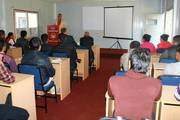
1 / 3
Message from Leadership
Message from the Campus Chief

Dear Students,
I want to remind each and every one of you that you have the power within you to achieve great things. The opportunities that lie ahead of you are endless, and I have no doubt that you will all make the most of them.
As you navigate through your studies and the challenges that come with them, remember to stay focused on your goals and to believe in yourselves. You are all capable of achieving greatness, and I have faith in your ability to succeed.
As a college community, we are here to support you in your journey. We will work together to create a positive and inclusive environment where you can thrive and reach your full potential.
Let's make this academic journey one to remember. Let's strive for excellence and make our college proud.
Sincerely,
Dr. Kishor Adhikari
Campus Chief
Message from the Founder Principal

To prospective students and other visitors to our site, I warmly welcome you and hope you will find learning about the program here at the Institute of Crisis Management Studies a fulfilling experience. Tribhuvan University has a strong history of excellence; we are now continuing this tradition in a new and much needed context at the Institute of Crisis Management Studies (ICMS).
To current students, our staff is dedicated to helping you fulfill your academic potential, as are the rich array of resources we have to offer. Not only will you be a student here at the institute, but after completion of your two years with us, you will become an ICMS alumnus, which we hope will be a lifelong partnership. Graduating from ICMS will offer a unique opportunity to play a significant role in the practical and academic needs of not only our own nation, but globally as well.
I invite you to read on and explore the opportunities we can offer you.
Sincerely,
Lt. Gen. (Retd.) Balananda Sharma
Founder Principal
Contact Information
Location
824 Dhumbarahi Marg
Kathmandu, Bagmati Province
+977-9765972081
Quick Actions
Related Colleges
Browse all colleges
Available Scholarships
Browse all scholarshipsPartialFeatured
UGC Nepal Higher Education Scholarship
University Grants Commission (UGC) Nepal
University Grants Commission provides scholarships to increase access to higher education for students with disabilities, economically disadvantaged students, Dalit students, children of martyrs and conflict victims, Mukta Kamlari, and Muslim women students.
Bachelor, Master
Deadline: March 26, 2025 (for 2081/082)
Tuition: Partial tuition support
governmentneed-basedinclusive
Updated: 2025-01-15View Details
Fully FundedFeatured
MOEST International Scholarships
Ministry of Education, Science and Technology (MOEST)
Ministry of Education, Science and Technology provides scholarships for Nepali students to study abroad through bilateral agreements with countries like China, India, Bangladesh, Russia, Pakistan, Japan, and others.
Bachelor, Master, Phd
Deadline: Varies by destination country
Tuition: 100%
internationalfully-fundedstudy-abroad
Updated: 2026-01-22View Details
PartialFeatured
Nepal Government Reserve Quota Scholarship
Government of Nepal
Constitutional provision for 45% reserved scholarships across all higher education institutions. Quotas are allocated for women, Janajati, Madhesi, Dalit, disabled, Muslim, and remote area students as per Nepal's inclusive education policy.
Bachelor, Master, Diploma
Deadline: Varies by institution
Tuition: Partial to full (varies by institution)
quotainclusivereserved
Updated: 2026-01-22View Details