About St. Xavier's College, Maitighar
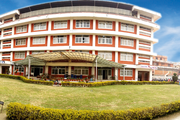
St. Xavier’s College (SXC), Maitighar, Kathmandu, established in 1988 and managed by the Nepal Jesuit Society, is one of Nepal’s leading educational institutions. Affiliated with Tribhuvan University and Cambridge Assessment International Education, the college offers +2 Science, GCE A-Levels, and diverse undergraduate and postgraduate programs in Science, Management, IT, Social Sciences, and Humanities. Renowned for academic excellence, holistic development, and international recognition, SXC fosters leadership, creativity, and service through quality education, state-of-the-art facilities, and vibrant student clubs.
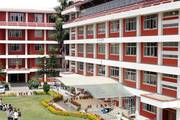
Campus Gallery

1 / 5

Message from Leadership
6. Why St. Xavier’s College?
- Prestigious Reputation: Known as one of the top colleges in Nepal for decades.
- Jesuit Legacy: Education system with global recognition, emphasizing values, ethics, and service.
- Holistic Education: Focus not just on academics but also leadership, creativity, and moral development.
- Strong Alumni Network: Graduates hold key positions in Nepal and abroad in science, business, IT, and social sectors.
- Global Opportunities: International standard curriculum (A-Levels), exchange programs, and global recognition.
- Diverse Programs: Wide range of options in Science, IT, Business, Humanities, and Social Sciences at both undergraduate and postgraduate levels.
- Research-Oriented: Encourages critical thinking, innovation, and research culture among students.
- Student Support: Active mentorship, career counseling, and guidance for higher studies and placements.
7. Conclusion
St. Xavier’s College (SXC) stands as a symbol of academic excellence, character formation, and global competitiveness in Nepal’s education system. By combining modern facilities, strong faculty, diverse programs, and international exposure, the college produces well-rounded graduates who excel not only in their careers but also as responsible citizens and leaders. Choosing St. Xavier’s means investing in an education that balances knowledge, values, and opportunities, making it one of the best choices for higher education in Nepal.
Message from the Principal

Dear Xavierians!
As we explore, reflect, and assimilate the theme of the year- interconnectedness, allow me to call your attention to a grave crisis that has deepened during the COVID-19 pandemic. Perhaps this story might help us to understand the theme of the year better.
Once, Mr. Moron was sailing with a group. As they sailed on he began to carve a hole on the boat to entertain himself with water gushing high like a fountain through the small hole he carved. The co-sailors were shocked to see his insanity and asked why he was being so reckless, endangering the lives of all. They asked him if he knew that the boat would slowly sink. Moron snubbed them saying, “it’s a small hole after all and it’s on my spot. What does it matter to you”?It matters because all of us on this planet are co-travelers in the same boat. Undiscerned actions of one person or a country affect all the co-travelers on this planet. The spread of the coronavirus, climate change in the world, displacement due to war are to name a few.
On the other hand, the goodness of humanity does not seem to spread as fast and vast as the evil in this global village. A recent report of WHO estimates that almost 690 million people went hungry in 2019 which is 10 million higher than in 2018. Needless to mention the current pandemic has added many more to the existing figure. It is loud and clear that hunger is a pressing humanitarian crisis today and as Xavierians, this cannot escape our eyes!
The first step to understanding the heaviness of hunger at the core level of a person is to feel the pain of the hungry. Take time to listen to their stories and witness the reality of their life. Then we may be moved to do the little we can to feed the hungry in our own surroundings. As St. Xavier’s College family let us begin with baby steps in addressing hunger around us!
I urge all Xavierians, alumni, parents, and friends of SXC to do all that we can as individuals and as groups to reach out to the hungry! Miss no chance to feed a hungry person and to be compassionate! Let no food ever be wasted!
Fr. Augustine Thomas S.J.
Principal
Contact Information
Location
Maitighar
Kathmandu, Bagmati Province
01-4221365 | 01-4244636
Quick Actions
Related Colleges
Browse all colleges
Available Scholarships
Browse all scholarshipsPartialFeatured
UGC Nepal Higher Education Scholarship
University Grants Commission (UGC) Nepal
University Grants Commission provides scholarships to increase access to higher education for students with disabilities, economically disadvantaged students, Dalit students, children of martyrs and conflict victims, Mukta Kamlari, and Muslim women students.
Bachelor, Master
Deadline: March 26, 2025 (for 2081/082)
Tuition: Partial tuition support
governmentneed-basedinclusive
Updated: 2025-01-15View Details
Fully FundedFeatured
MOEST International Scholarships
Ministry of Education, Science and Technology (MOEST)
Ministry of Education, Science and Technology provides scholarships for Nepali students to study abroad through bilateral agreements with countries like China, India, Bangladesh, Russia, Pakistan, Japan, and others.
Bachelor, Master, Phd
Deadline: Varies by destination country
Tuition: 100%
internationalfully-fundedstudy-abroad
Updated: 2026-01-22View Details
PartialFeatured
Nepal Government Reserve Quota Scholarship
Government of Nepal
Constitutional provision for 45% reserved scholarships across all higher education institutions. Quotas are allocated for women, Janajati, Madhesi, Dalit, disabled, Muslim, and remote area students as per Nepal's inclusive education policy.
Bachelor, Master, Diploma
Deadline: Varies by institution
Tuition: Partial to full (varies by institution)
quotainclusivereserved
Updated: 2026-01-22View Details