About Kathmandu College of Central State
The Tribhuvan University BCA Entrance Examination 2082 has been officially announced, with the final date for submission of applications set for October 16, 2025. Students aspiring to join the Bachelor of Computer Application (BCA) program under TU must complete the entrance requirements within this deadline in order to secure their eligibility. The entrance exam serves as a gateway for students who wish to pursue their career in the field of information technology, computer applications, and digital innovation.
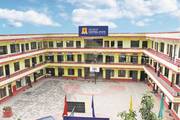
Alongside this, Kathmandu College of Central State (KCCS), a prestigious institution located at Soalteemode, Kalimati, Kathmandu, has opened its admissions for the academic year 2082. The college is inviting applications for three popular undergraduate programs: Bachelor of Business Studies (BBS), Bachelor of Computer Application (BCA – 35 seats), and Bachelor of Arts in Social Work (BASW). With an affiliation to Tribhuvan University, KCCS ensures that students gain both academic knowledge and practical skills required to excel in their chosen fields. The deadline to apply for these programs is November 16, 2025.
Established in 1988 AD, KCCS has built a reputation as a hub of academic excellence, blending rigorous curricula with a focus on seminars, research, field visits, and career counseling. The institution is recognized nationally and internationally for producing competent graduates who thrive in the competitive global market. With highly experienced faculty, modern facilities, and a student-centered teaching approach, the college provides a friendly yet professional learning environment. Students enrolling in these programs will not only gain quality education but also benefit from exposure to extracurricular activities, innovation-driven learning, and scholarship opportunities, making KCCS one of the most reliable destinations for higher education in Nepal’s capital city.
Campus Gallery
1 / 5
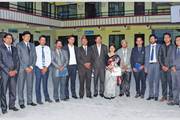
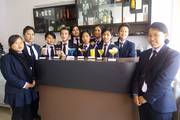
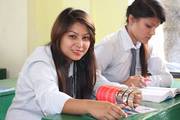
Message from Leadership
Why Kathmandu College of Central State (KCCS)?
- Established legacy of over 35 years in higher education.
- Strong reputation in delivering quality academic programs.
- Located in the heart of Kathmandu, easily accessible.
- Focus on practical learning through seminars, industrial visits, and research.
- Provides holistic education blending knowledge, creativity, and discipline.
- Committed to producing globally competitive graduates.
- Offers a supportive environment with modern facilities, experienced faculty, and career-oriented guidance.
- Known as a renowned college of the capital city with a track record of nurturing productive and responsible citizens.
Conclusion
Kathmandu College of Central State (KCCS) is a premier educational institution that balances academic rigor with practical exposure. With its wide range of programs, experienced faculty, strong commitment to student development, and scholarship opportunities, KCCS stands out as a trusted choice for students aiming to excel in the competitive global market.
Message from the Principal

I am delighted to welcome all prospective students, parents, guardians, and well-wishers at Kathmandu College of Central State. Our inclusive ethos and commitment to the highest standard in teaching-learning activities are establishing Kathmandu College of Central State a nationally renowned business college among the colleges. I expect each student comes here with strives to achieve the aspirations through hard work. Students arriving here from diverse backgrounds share common bonds; they value learning, respect each other, and appreciate the skills and expertise of their teachers. We are committed to creating a caring environment that fosters respect, integrity, and personal achievement in an open and innovative method. Along with facilitating the students to learn the principles and practices of management/administration, we value the learning of right attitude, co-operation, respect to the labor, and a motive of hard-work, which are the core needs of each successful leader today.
Manoj Kumar Thapa Magar
Principal
Contact Information
Location
Soalteemode, Kalimati
Kathmandu, Bagmati Province
01-4278342, 01-4278965
Quick Actions
Related Colleges
Browse all colleges
Available Scholarships
Browse all scholarshipsPartialFeatured
UGC Nepal Higher Education Scholarship
University Grants Commission (UGC) Nepal
University Grants Commission provides scholarships to increase access to higher education for students with disabilities, economically disadvantaged students, Dalit students, children of martyrs and conflict victims, Mukta Kamlari, and Muslim women students.
Bachelor, Master
Deadline: March 26, 2025 (for 2081/082)
Tuition: Partial tuition support
governmentneed-basedinclusive
Updated: 2025-01-15View Details
Fully FundedFeatured
MOEST International Scholarships
Ministry of Education, Science and Technology (MOEST)
Ministry of Education, Science and Technology provides scholarships for Nepali students to study abroad through bilateral agreements with countries like China, India, Bangladesh, Russia, Pakistan, Japan, and others.
Bachelor, Master, Phd
Deadline: Varies by destination country
Tuition: 100%
internationalfully-fundedstudy-abroad
Updated: 2026-01-22View Details
PartialFeatured
Nepal Government Reserve Quota Scholarship
Government of Nepal
Constitutional provision for 45% reserved scholarships across all higher education institutions. Quotas are allocated for women, Janajati, Madhesi, Dalit, disabled, Muslim, and remote area students as per Nepal's inclusive education policy.
Bachelor, Master, Diploma
Deadline: Varies by institution
Tuition: Partial to full (varies by institution)
quotainclusivereserved
Updated: 2026-01-22View Details