About Padma Kanya Multiple Campus
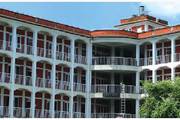
Padma Kanya Multiple Campus (PKMC), located in Bagbazar, Kathmandu, is Nepal’s first women’s campus, founded on 17th September 1951 (Aswin 2008 BS). Initially, academic activities were conducted at the site of Kanya School in Dillibazar before moving to its current 4.6-acre campus. As the oldest women’s college in Nepal, PKMC has a proud history of more than seven decades and has consistently upheld its motto, “Quality Education for Women Empowerment.” The campus offers a wide range of programs at both Bachelor’s and Master’s levels, including BA, BBA, BBM, BBS, BHM, BPSG, BSc, BCA, BSc CSIT, BIT, MA in Rural Development, English, Nepali, Political Science, Sociology and Anthropology, Population Studies, MBS, MBM, MIT, as well as specialized programs for women such as Master’s in Food and Nutrition, Child Development, Gender Sensitization, and a one-year Postgraduate Diploma in Women’s Studies. Over the years, PKMC has expanded its academic horizon to cover Humanities, Social Sciences, Management, Science, and Technology while welcoming students from Nepal and neighboring countries like India, Sri Lanka, and Korea. The campus comprises multiple buildings for academic, administrative, and accommodation purposes, with ongoing plans for infrastructural development and library enrichment. Dedicated faculty members provide quality education and practical learning through seminars, workshops, field visits, and research activities, aiming to empower women to face social challenges, build leadership, and succeed professionally. PKMC remains a distinguished institution committed to producing skilled, confident, and socially responsible female leaders.
Campus Gallery
1 / 3

Message from Leadership
Why Choose Padma Kanya Campus?
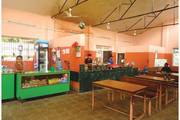
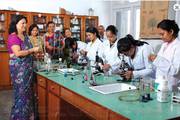
Padma Kanya Multiple Campus is the only government college in Nepal exclusively for female students, dedicated to empowering women through education. The campus offers spacious classrooms, well-equipped laboratories, a large library, hostel facilities, a canteen, and playgrounds. High-quality education is ensured through an experienced and professional teaching faculty. Beyond academics, the campus organizes seminars, workshops, field visits, and women’s leadership programs, providing students with practical exposure and holistic development.
Message from the Campus Chief
I feel honored to have this opportunity to welcome students, teachers, and administrative staff of Padma Kanya Campus, the only constituent Campus of the Tribhuvan University established over six decades ago for imparting higher education to women. Additionally, I express my gratefulness to students who have trusted this campus as a destination for their learning.
Higher education for women in the world was not common until 1889 as they were limited to household work. Women were allowed to study at Oxford University but they were not granted a degree until ..... Modern, formal education for Girls began in India during the British Colonial period. Traditional education under the Gurukul was, however, part of ancient Hindu culture. If we think of the history of the university in modern terms, Bologna was the oldest university in the world. South Asian history of university started with Takshyashila and Nalanda Universities some 2500 years ago. Unfortunately, South Asia could not continue its scholarly traditions owing to political upheavals in the region. Yet education has been considered to be the foundation of human humility, righteousness, wealth, right action and happiness in the South Asian tradition and thinking as expressed in this stanza:
Bidhya dadati Binayam binayat yati patratam
patratwo dhan mapnoti dhanat dharma tata sukham
Padma Kanya Campus has been established by the founders with the pious aim of imparting higher education to women to ensure their happiness as empowered citizens. The Campus which started with just a few Intermediate and Bachelor level programs in the humanities has expanded its academic horizon over the years. Currently, it runs Bachelor and Master level programs under the faculty of Humanities and Social Sciences, Management, and Science and Technology. It has been gradually adding up programs of like Bachelor of Business Administration, Bachelor of Computer Application and Bachelor of Hotel Management with a view to cater to the growing vocational needs of the students. This Campus has played a significant role in women's empowerment through higher education.
The graduates of this Campus have pioneered social, cultural, educational and political interventions in the country. I recall it with pride that many girls who graduated from this Campus now hold leadership positions in diverse avenues of society at the national and international levels.
I appreciate the unrelenting support and courage received from national and international well-wishers like the Government of Denmark, Government of Japan, and the United Arab Emirates. Finally, as the Campus Chief, I express gratitude to the former and current students for choosing this college as their alma mater, and for their contribution and devotion to make this institution an elegant venue of learning.
Significant Changes are taking place in the campus at present. The campus has got autonomy to run its academic programs. It is working towards gaining accreditation from the University Grants Commission. Following the privileges of autonomous status, the Campus is in a position to designing a few new courses and run them independently. We are trying to envision cutting-edge academic programs capable of meeting the complex academic and societal needs. For materializing the dream of making PKMC a competitive academic institution of Nepal, I honestly urge the concerned students, faculty, staff and guardians that our mutual effort will change the face of this institution and produce female human resources capable to meet the growing global challenges of the time through their learning of pure and applied sciences. It is worth noting at this moment that education alone can build and save human societies from threats and challenges. Furthermore, women's education has greater consequences because they are the game changers at home and the workplace. Therefore, I humbly request to all stakeholders to help this institution from the possible quarters so that we are able to produce bold, critical, visionary and creative women who will lead our society.
PKMC is centrally located at the heart of Kathmandu city. In terms of physical infrastructure and other amenities, it can efficiently run academic programs that require moderate facilities. It does have qualified faculty strength and sufficient educational resources. I feel that we still need to fix our academic calendar with the extreme amount of particularity; we need to revisit our pedagogy by diversifying it towards critical interactive methodologies where students do have greater opportunities to learn by doing; we need to make the faculty and the administrative staff more committed and responsible to their duty, and we need to divert students' attention from political sloganeering and indulgence to diligent educational practices demanding their devotion to learning. It's time that we start from self-improvement and if we do so, we can change the face of PKMC for the better. With humility, I request the students, faculty and administrative staff for their support and urge them to remain committed to the welfare, further upliftment and progress of PKMC. I am sure that our efforts shall certainly yield and we will continue producing fully empowered women.
Dr. Jayalaxmi Pradhan
Campus Chief
Contact Information
Location
Bagbazar
Kathmandu, Bagmati Province
01-4224149, 01-4221712
Quick Actions
Related Colleges
Browse all colleges
Available Scholarships
Browse all scholarshipsPartialFeatured
UGC Nepal Higher Education Scholarship
University Grants Commission (UGC) Nepal
University Grants Commission provides scholarships to increase access to higher education for students with disabilities, economically disadvantaged students, Dalit students, children of martyrs and conflict victims, Mukta Kamlari, and Muslim women students.
Bachelor, Master
Deadline: March 26, 2025 (for 2081/082)
Tuition: Partial tuition support
governmentneed-basedinclusive
Updated: 2025-01-15View Details
Fully FundedFeatured
MOEST International Scholarships
Ministry of Education, Science and Technology (MOEST)
Ministry of Education, Science and Technology provides scholarships for Nepali students to study abroad through bilateral agreements with countries like China, India, Bangladesh, Russia, Pakistan, Japan, and others.
Bachelor, Master, Phd
Deadline: Varies by destination country
Tuition: 100%
internationalfully-fundedstudy-abroad
Updated: 2026-01-22View Details
PartialFeatured
Nepal Government Reserve Quota Scholarship
Government of Nepal
Constitutional provision for 45% reserved scholarships across all higher education institutions. Quotas are allocated for women, Janajati, Madhesi, Dalit, disabled, Muslim, and remote area students as per Nepal's inclusive education policy.
Bachelor, Master, Diploma
Deadline: Varies by institution
Tuition: Partial to full (varies by institution)
quotainclusivereserved
Updated: 2026-01-22View Details